
pH neutral sand is construction sand with a pH value between 6.8 and 7.2 — neither acidic nor alkaline. In construction, this range is the sweet spot where sand works with cement chemistry instead of against it. At Stonage, every batch of dam-dredged sand is tested and certified within this range before dispatch.
What is pH and why does it matter in sand?
pH is a scale from 0 to 14 that measures how acidic or alkaline a substance is. Pure water sits at pH 7 — perfectly neutral. Anything below 7 is acidic; anything above 7 is alkaline.
In construction sand, the pH of the material directly affects how your cement, mortar, and concrete behave — during mixing, during curing, and over the decades your structure stands.
Most homeowners in Kerala never think to ask about sand pH. They look at colour, feel the texture, maybe ask if it’s “river sand.” But pH is invisible, and it does more damage silently than any visible impurity ever could.
What happens when sand pH is wrong
Alkaline sand (pH above 8)
Alkaline sand — which includes most M-Sand, with a typical pH of 8.0 to 9.5 — causes a cascade of problems that usually don’t show up until years after construction.
Disrupted cement hydration. Cement sets through a chemical reaction called hydration. Alkaline environments interfere with this process, producing a weaker bond between sand particles and cement paste. The result is mortar and concrete that looks fine on the surface but has reduced compressive strength underneath.
Efflorescence. This is the white, chalky deposit you often see on plastered walls in Kerala. It happens when alkaline compounds — driven by water movement — migrate to the surface and crystallise. Once it starts, it keeps coming back. The paint peels. The wall looks old within two years of construction. The root cause, more often than not, is alkaline sand.
Rebar corrosion. In RCC structures — slabs, columns, beams, foundations — alkaline sand accelerates corrosion of the steel reinforcement inside. The steel expands as it rusts, which cracks the concrete from within. This is one of the most expensive and dangerous forms of structural damage, and it typically appears 5 to 10 years after construction.
Acidic sand (pH below 6.5)
Acidic sand is less common but equally damaging. Acid attacks the calcium compounds in cement — specifically calcium silicate hydrate, which is the primary source of concrete’s strength. Over time, acidic sand slowly dissolves the structural integrity of your building from the inside.
Beach sand in Kerala, which is sometimes used informally for construction, is often both acidic in pH and high in salt — a damaging combination that accelerates both cement degradation and rebar corrosion simultaneously.
Why pH 6.8–7.2 is the right range for construction
The pH range of 6.8 to 7.2 is where cement chemistry works optimally. In this range:
- Cement hydration proceeds without interference, producing full design strength
- Calcium compounds in concrete remain stable and intact over decades
- Steel reinforcement is protected from electrochemical corrosion
- Plaster dries uniformly without shrinkage cracks or surface deposits
- Paint and surface finishes bond cleanly without adhesion failures
This is not a range Stonage chose arbitrarily. It aligns with IS 383:2016, the Indian Standard specification for coarse and fine aggregates, and is the benchmark used in quality-controlled construction across RERA-registered and government projects in Kerala.
How Stonage ensures pH neutral sand every time
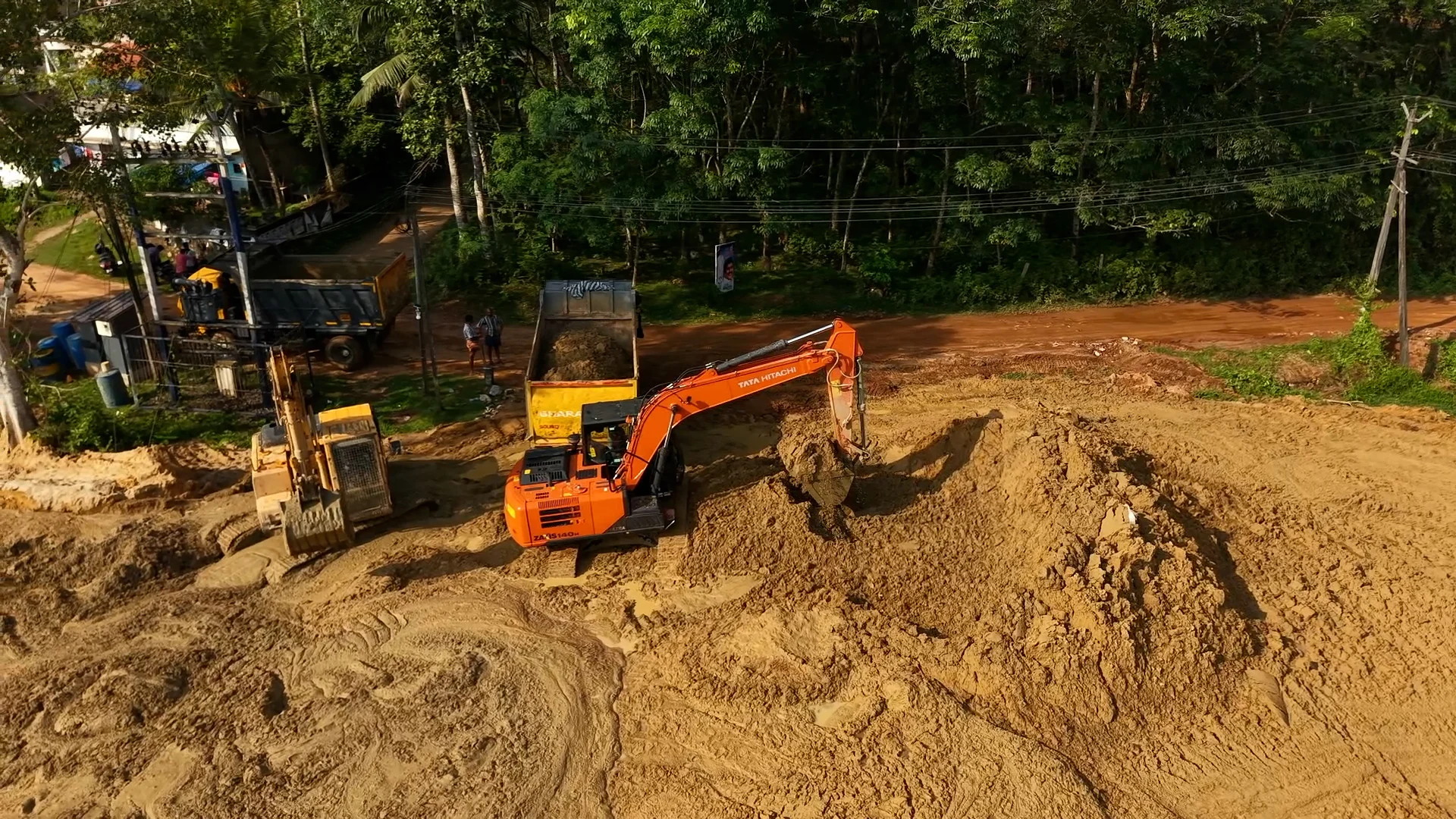
Dam-dredged sand from reservoir zones has a natural advantage: decades of submersion in controlled freshwater bodies means it has already been washed of alkaline mineral deposits, organic acids, and saline contamination. The source environment does much of the work before dredging even begins.
But natural advantage is not a guarantee. That is why Stonage tests every batch before dispatch.
The process:
- Sand is extracted from licensed dam reservoir zones in and around Trivandrum
- Raw material passes through washing and screening to remove silt, clay, and organic matter
- Each batch is tested for pH using standardised laboratory methods
- Only batches within pH 6.8–7.2 are cleared for supply
- The pH test certificate travels with every delivery — along with the source licence and delivery challan
No batch ships without a passing pH result. No exceptions.
Comparing sand types by pH — what Kerala builders actually use
| Sand type | Typical pH | Risk level |
|---|---|---|
| Stonage dam-dredged sand | 6.8–7.2 | None — certified neutral |
| Riverbed sand (open source) | 6.5–8.0 | Variable — depends on source |
| M-Sand (manufactured) | 8.0–9.5 | High — alkaline |
| Beach sand | Varies, often saline | Very high — salt + pH risk |
M-Sand is legal and widely used in Kerala, but its alkaline pH is a real limitation — particularly for plastering work, where it consistently produces harsher finishes and higher efflorescence risk compared to pH neutral river sand.
What this means for your Kerala home specifically
Kerala’s climate creates conditions where pH-related damage shows up faster than in drier parts of India. High humidity means walls are almost always slightly moist. Monsoon seasons drive water through microscopic pores in plaster. This constant moisture movement accelerates every pH-related failure mechanism — efflorescence, rebar corrosion, and cement degradation all progress faster in humid conditions.
For homeowners in Trivandrum, Kollam, Ernakulam, and other high-rainfall districts, using pH neutral sand is not just a quality preference — it is the difference between a home that looks and performs well for 30 years and one that begins showing structural distress within a decade.
Questions homeowners ask about sand pH
Can I test my sand’s pH myself? A basic pH test can be done with a soil testing kit available at agricultural supply stores — dissolve a small sand sample in distilled water and test the solution. However, for construction purposes, laboratory testing to IS standards is the only result that holds up for documentation and compliance purposes.
Does pH matter more for plastering or for RCC? Both matter, but for different reasons. In plastering, pH affects surface finish quality, efflorescence risk, and crack formation — problems that are visible. In RCC, pH affects rebar corrosion — a problem that is invisible until it causes structural failure. Arguably, the RCC risk is more serious because of its safety implications.
Is M-Sand’s high pH a disqualifying defect? Not in all applications. M-Sand is widely used and IS 383:2016 compliant. But for plastering specifically, its angular particles combined with high pH produce inferior results compared to pH neutral river sand. Many contractors in Kerala use M-Sand for concrete work and specify river sand for plaster — a reasonable practical approach.
Does Stonage supply for individual home builds or only large projects? Both. Stonage supplies flexible load sizes — from individual residential plots to large commercial and government projects — with the same pH certification and documentation for every delivery regardless of quantity.
The bottom line
Sand pH is the most important invisible quality marker in construction sand. It cannot be seen, touched, or judged by colour. It can only be tested. And it determines whether your plaster stays smooth, your walls stay clean, and your structure stays sound for the decades ahead.
At Stonage, every batch of dam-dredged river sand is tested and certified at pH 6.8–7.2 before it leaves for your site. That test certificate comes with every delivery — because your home deserves sand you can verify, not just trust.
Get certified pH neutral sand delivered to your site. Call or WhatsApp Stonage: +91 97 444 544 77 Serving Trivandrum, Kollam, Kottayam, and across Kerala. Mon–Sat · 8 AM – 6 PM · Malayalam & English